Whole Body Donation For Medical Research
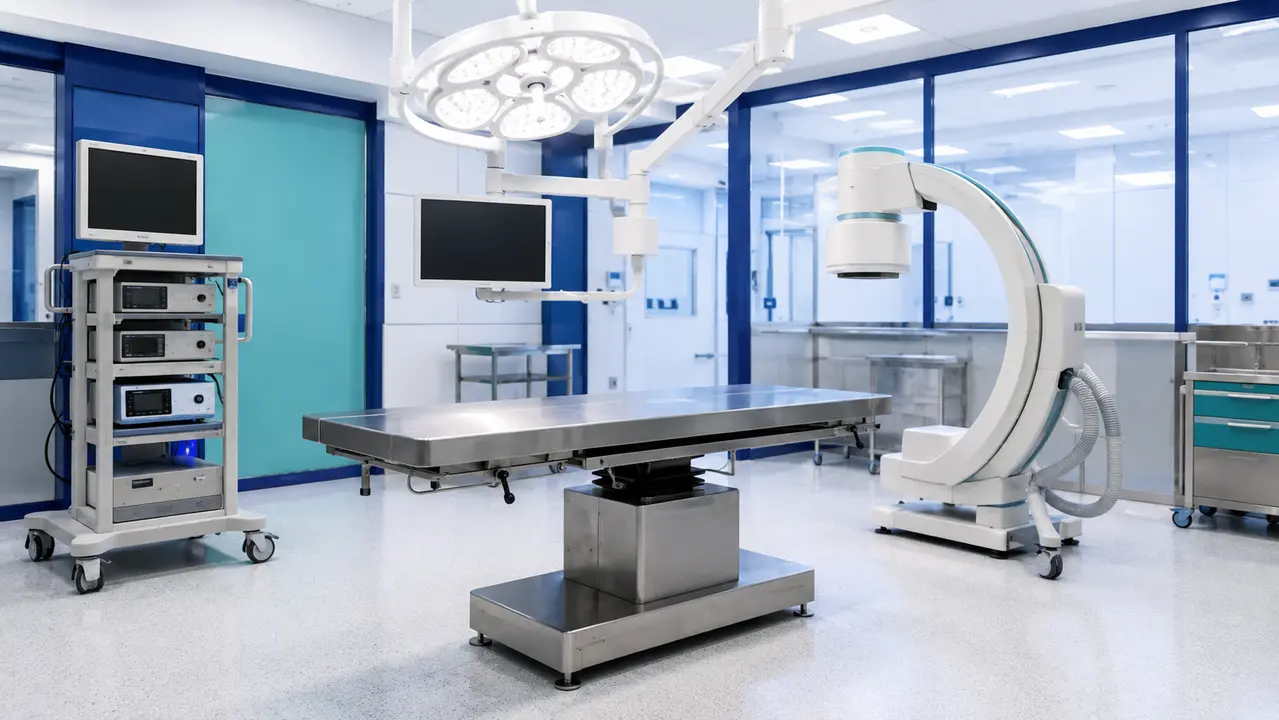
A device validation study fails when the anatomical model lacks the tissue plane variability of a living patient. Synthetic simulators reproduce surgical geometry but cannot replicate the friction coefficients of living adipose or the friability of calcified vascular tissue. This structural gap dictates how medical device companies and surgical course directors must design their pre-clinical phases. Human anatomical specimens provide the only high-fidelity medium for validating instrument torque, navigation accuracy, and tissue approximation before a clinical trial.
Securing that biological material requires navigating a documented chain of consent, screening, and operational compliance. The process begins long before a specimen arrives at the laboratory and continues through final disposition. Understanding this lifecycle determines how course directors and research teams schedule their wet labs, allocate their resources, and structure their protocols.
Our facility manages this lifecycle under Ministry of Health supervision. We coordinate donor recruitment, fresh-frozen specimen import, pre-scan imaging, and laboratory preparation. The operational parameters outlined here define what professionals must verify when planning a study or training event.
Reading time: 11 minutes
Key points
- Human anatomical specimens provide the only high-fidelity medium for validating device torque and tissue approximation before clinical trials.
- A documented chain of consent, screening, and operational compliance dictates the auditability of a surgical training event or research study.
- Strict governance and purpose limitation ensure donor dignity across all research and training contexts.
- Facility controls and screening rigor protect research integrity by matching the biological material to exact study specifications.
Contents
- What is whole body donation for medical research?
- How does a whole body donation program work end-to-end?
- What is the difference between whole body donation, cadaver donation, and anatomical donation?
- What consent and documentation should professionals expect and retain?
- What eligibility and exclusion criteria are typical for whole body donation?
- How is donor screening performed at the time of death, and why does it matter for research quality?
- What donor information can be available, and under what permissions?
- What ethical and governance expectations should professionals apply?
- What legal and compliance considerations shape donation programs?
- How should institutions evaluate a donation partner?
- What logistics and timelines should professionals plan for?
- What happens after research or training is completed?
- What misconceptions create risk in professional communication?
What is whole body donation for medical research?
Whole body donation for medical research is the voluntary, consent-based gift of a person’s physical remains after death to support ethically governed medical research, education, and professional training. The terms medical research and medical education frequently overlap operationally in translational environments where surgical skills development and device validation occur simultaneously. A research team evaluating a new spinal pedicle screw system requires the same anatomical fidelity as a surgeon practicing a minimally invasive approach. Both applications rely on infrastructure where human anatomy fidelity matters for medical device evaluation and training.
Our facility structures its governance and respect protocols around this overlap. We treat each donation as a designated anatomical gift restricted to the explicit purposes authorized in the consent documentation. The practical application of this donation takes place in specialized training environments, such as a facility focused on cadaver lab anatomy.
How professionals use donated bodies without compromising respect
Strict governance, purpose limitation, and trained personnel requirements ensure donor dignity. Access to the laboratory is restricted to credentialed professionals listed on the approved study protocol. Photography is prohibited unless explicitly authorized for research documentation under de-identified conditions. Every interaction with the specimen occurs under the supervision of trained anatomical staff who enforce the facility’s Statement of Respect.
Typical research and training contexts
Professionals utilize donated bodies for outcomes-focused contexts including surgical skills development, medical device validation, and procedural rehearsal. A neurosurgery team may practice a new approach to the posterior fossa. An otolaryngology group might validate the navigation accuracy of a new endoscopic instrument. Orthopaedic surgeons test the mechanical limits of a novel arthroplasty system. These contexts require precise anatomical matching, fresh-frozen preservation for realistic tissue response, and documented chain-of-custody from intake to final disposition.
How does a whole body donation program work end-to-end?
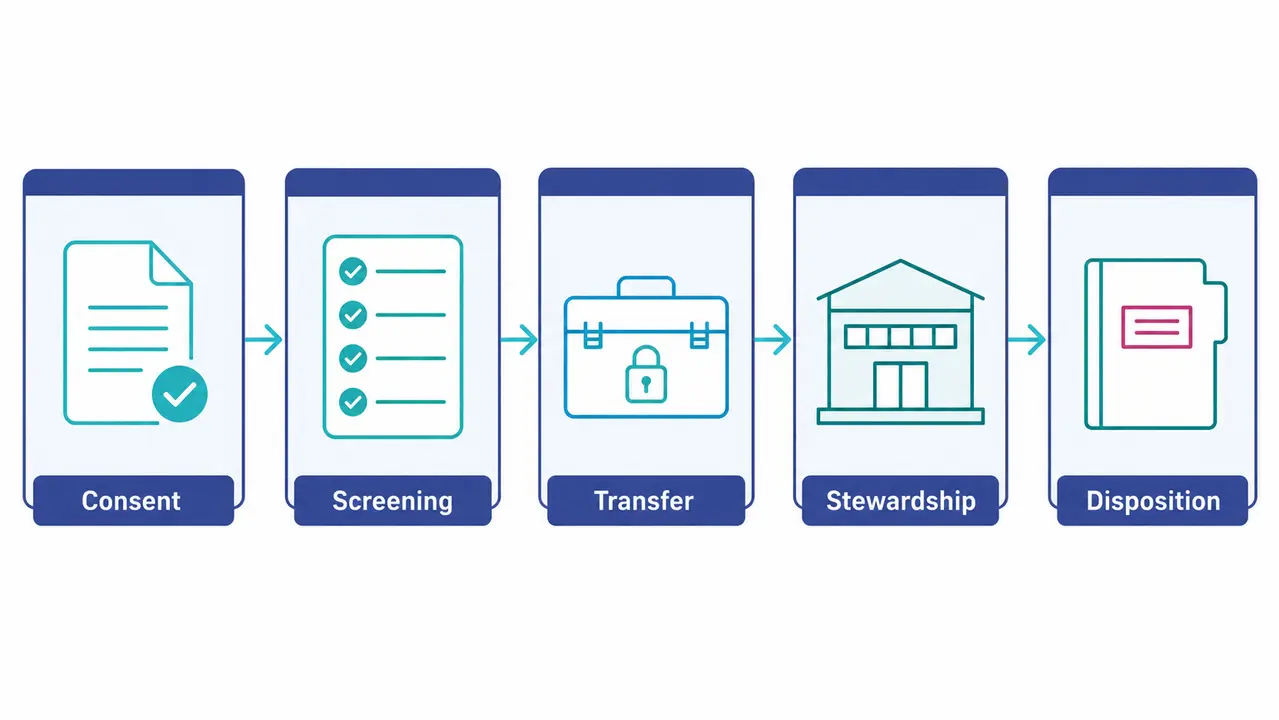
A body donation program operates through a sequence of documented operational stages. The cycle begins with pre-registration and consent during life, or next-of-kin authorization at the time of death. Following death notification, the program conducts eligibility screening. A secure transfer moves the remains to the facility. Documented stewardship follows, covering the period of active research or training. The process concludes with a dignified final disposition.
Professionals including CME coordinators and research leads must understand the operational checkpoints within this sequence. Documentation completeness, identity verification, and chain-of-custody logs dictate the auditability of the entire study. A missing transfer record or an incomplete screening attestation can invalidate a device validation study. The facility enforces these checkpoints to ensure that the biological material entering the laboratory meets the exact specifications of the approved protocol.
Pre-registration vs next-of-kin authorization pathways
Pre-registration involves a donor completing consent documentation during life, specifying the permitted uses of their remains. Next-of-kin authorization occurs when legal representatives provide consent at the time of death. Both pathways require rigorous documentation. Pre-registration does not bypass the need for identity verification or screening at the time of death. The facility requires a death certificate, the signed consent form, and medical history records before accepting a transfer.
Operational checkpoints that protect quality and compliance
Facility controls and auditability govern the acceptance process. Acceptance is never guaranteed, even with prior registration. The program assesses the donor’s medical and social history, cause of death, and logistical constraints before approving the transfer. If a donor presents an exclusion criterion discovered during screening, the facility declines the donation. This strict gatekeeping protects research integrity and ensures the specimen matches the study requirements.
What is the difference between whole body donation, cadaver donation, and anatomical donation?
In professional practice, the terms whole body donation, cadaver donation, and anatomical donation are frequently used interchangeably. Anatomical donation serves as the broader professional term for consented donation of human material for education and research. This term encompasses entire bodies as well as specific organs or tissues designated for study. Institutions use these definitions to map terminology for policies, standard operating procedures, and course materials.
Cadaver donation and whole body donation typically refer to the gift of the entire physical remains rather than isolated organs. Consistent language aligned with respect statements and institutional governance is essential. When a device company requests a torso, cephalous (head), or pelvic specimen for a validation study, the procurement documentation must accurately reflect the authorized scope of the anatomical gift. Our facility adheres to precise terminology in all consent records and laboratory logs to maintain compliance and transparency.
What consent and documentation should professionals expect and retain?
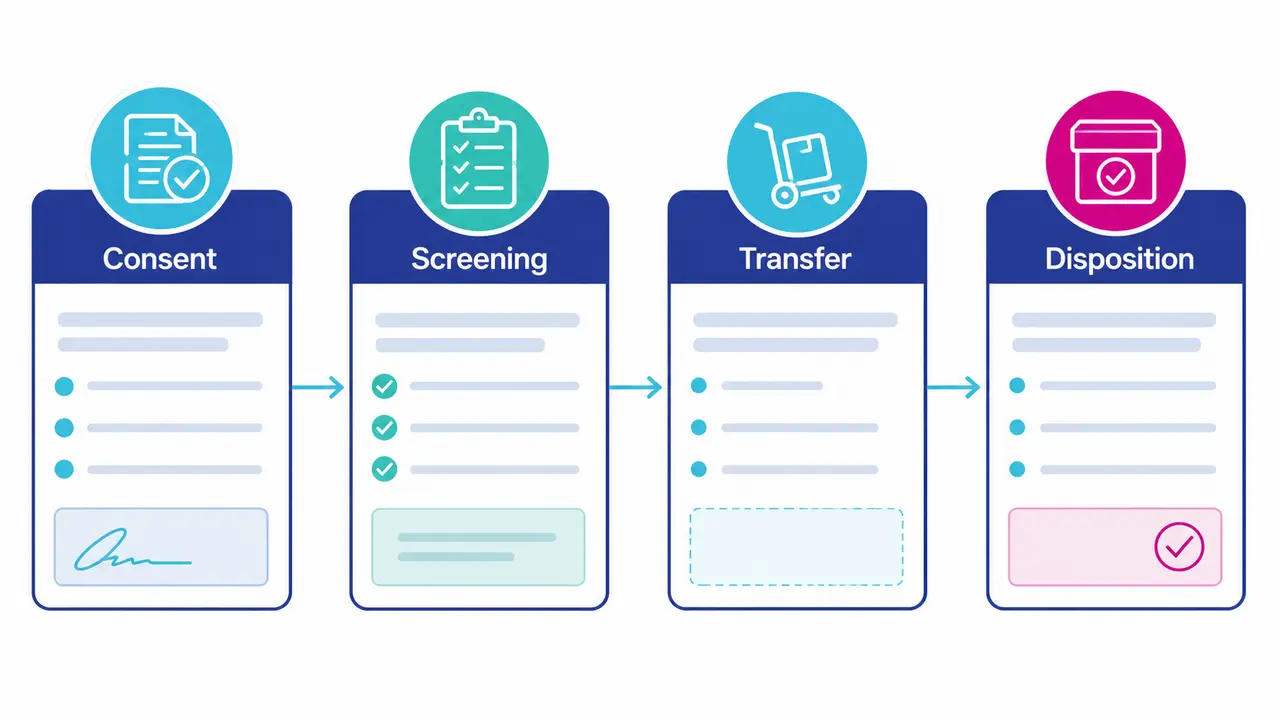
Professionals conducting research or training with human specimens must expect and retain specific documentation sets. Documented informed consent, identity verification, program terms of use, and clear permissions or limitations constitute the core records. These documents must align with the intended use of the specimen, whether for education, training, or research and development. Retention practices must align with institutional governance and audit requirements. A course director leading a hands-on session in foot and ankle surgery must possess documentation confirming that the donor consented to orthopaedic training. A device engineer testing a new laparoscopic tool needs documentation verifying the specimen is authorized for R&D purposes. The facility retains these records to demonstrate ethical oversight and quality assurance.
Documentation checklist for course directors and research teams
| Documentation Category | Required Records | Verification Checkpoint |
|---|---|---|
| Consent and Authorization | Informed consent form, next-of-kin authorization, donor registration details | Verified prior to specimen transfer and intake |
| Screening Attestations | Medical history review, infectious risk assessment, cause-of-death documentation | Completed during eligibility screening phase |
| Transfer Records | Chain-of-custody logs, secure transport documentation, intake condition reports | Maintained from release to facility arrival |
| Disposition Confirmation | Final disposition records, cremation or return authorization, study completion logs | Filed after permitted use concludes |
Aligning consent scope with intended use
Privacy and minimum necessary access govern the handling of donor information. The facility connects documentation to ethical oversight by restricting specimen access to personnel listed on the approved study protocol. If a study focuses on spinal surgery, the research team cannot access unrelated anatomical regions without explicit authorization. This alignment protects donor dignity and meets the quality assurance expectations of regulatory bodies.
What eligibility and exclusion criteria are typical for whole body donation?
Eligibility for body donation is program-specific and depends on factors affecting safety, logistics, and suitability for intended educational or research use. The facility evaluates infectious risk screening, severe trauma, and logistical constraints. A specimen intended for a plastic and reconstructive surgery course must not exhibit extensive trauma or previous surgical alterations in the target region. High-level criteria exist to protect laboratory staff and ensure the specimen serves the clinical objective.
Why programs may decline a donation even with prior registration
Exclusion criteria are assessed at or near the time of death. Variability exists in the condition of human remains. A donor may have registered years prior, but an acute infection or a severe traumatic injury sustained near death will disqualify the donation. The facility prioritizes safety and research integrity over fulfilling a quota. If the screening reveals an infectious disease risk, the program declines the donation regardless of prior registration status.
Planning for an alternate disposition pathway
Professionals must ensure a contingency plan is in place if a donation is declined at the time of death. Course directors scheduling a multi-station surgical simulation lab should build schedule flexibility. If a matched specimen is declined during screening, the facility must source an alternative, which affects timelines. Establishing an alternate disposition pathway for the declined donor ensures respectful handling while the research team adjusts the schedule.
How is donor screening performed at the time of death, and why does it matter for research quality?
Screening combines medical and social history review, cause-of-death information, and safety checks to protect staff and align with permitted uses. This process supports research integrity by reducing confounders and ensuring suitability for training objectives. A specimen with severe peripheral vascular disease may not suit a podiatry training protocol requiring realistic distal vasculature. Screening identifies these variables before the specimen enters the laboratory. Recognized scientific guidelines on donor handling and screening dictate these practices. A peer-reviewed resource on working with human body donors in medical training and research outlines the necessity of rigorous history review and physical assessment. Whole body donation requires this level of scrutiny to ensure the anatomical gift fulfills its intended purpose.
What donor information can be available, and under what permissions?
Some programs provide limited donor background information and, when permitted, diagnostic imaging or clinically relevant history. Access to clinical history and imaging supports the planning phases of medical device testing. Pre-session CT or MRI allows a research team to map anatomical variations before the study begins. This data supports planning and reproducibility for device evaluation or procedural training. The facility maintains strict access controls over this information. Donor ID information, including age, weight, BMI, clinical conditions, and prior surgeries, is available as long as permitted by law and donation conditions.
Matching criteria for research and training
Researchers request specific anatomical criteria ethically, without treating donors as a commodity. A request for a specimen with a specific BMI range or documented osteoarthritis for an orthopaedic study is standard. The facility matches the clinical question to the available donor pool. If a study requires a torso specimen for a cardiac device validation, the matching process focuses on cardiac anatomy and relevant pathology. This process respects the donor by utilizing the gift strictly for its authorized, scientifically valid purpose.
Data governance, access control, and de-identification
Privacy safeguards and de-identification govern the handling of donor data. The facility removes direct identifiers from research datasets. Access to the donor’s medical history is restricted to the principal investigator and the facility’s anatomical staff. This data governance ensures compliance with privacy obligations and maintains the integrity of the research record.
What ethical and governance expectations should professionals apply?
Ethical stewardship requires dignity-centered handling, purpose limitation, trained personnel, controlled access, and transparent oversight. Governance artifacts include respect statements, staff training requirements, visitor policies, photography prohibitions, and incident management protocols. Professional anatomical associations outline these expectations. The established best practices for human body donation committees provide a framework for governance protocols. Our facility enforces these standards by requiring all visiting surgeons and engineers to review the Statement of Respect before entering the laboratory. A visitor policy limits access to credentialed professionals. Incident management protocols ensure any deviation from the standard operating procedure is documented and addressed.
What legal and compliance considerations shape donation programs?
Requirements vary by jurisdiction, but professionals must expect a defined legal basis for anatomical gifts, documented authorization, and compliance controls. A professional must verify record retention policies, privacy obligations, and restrictions on use rather than citing specific statutes. The facility operates under Ministry of Health supervision, ensuring the legal framework for anatomical examination and research is strictly followed. Cadaver donation requires documented chain-of-custody from the point of origin to final disposition. The facility does not possess regulatory accreditation claims beyond this supervisory framework. Research teams must rely on the facility’s documented compliance controls and the legal basis of the anatomical gift act under which the specimen was procured.
How should institutions evaluate a donation partner?
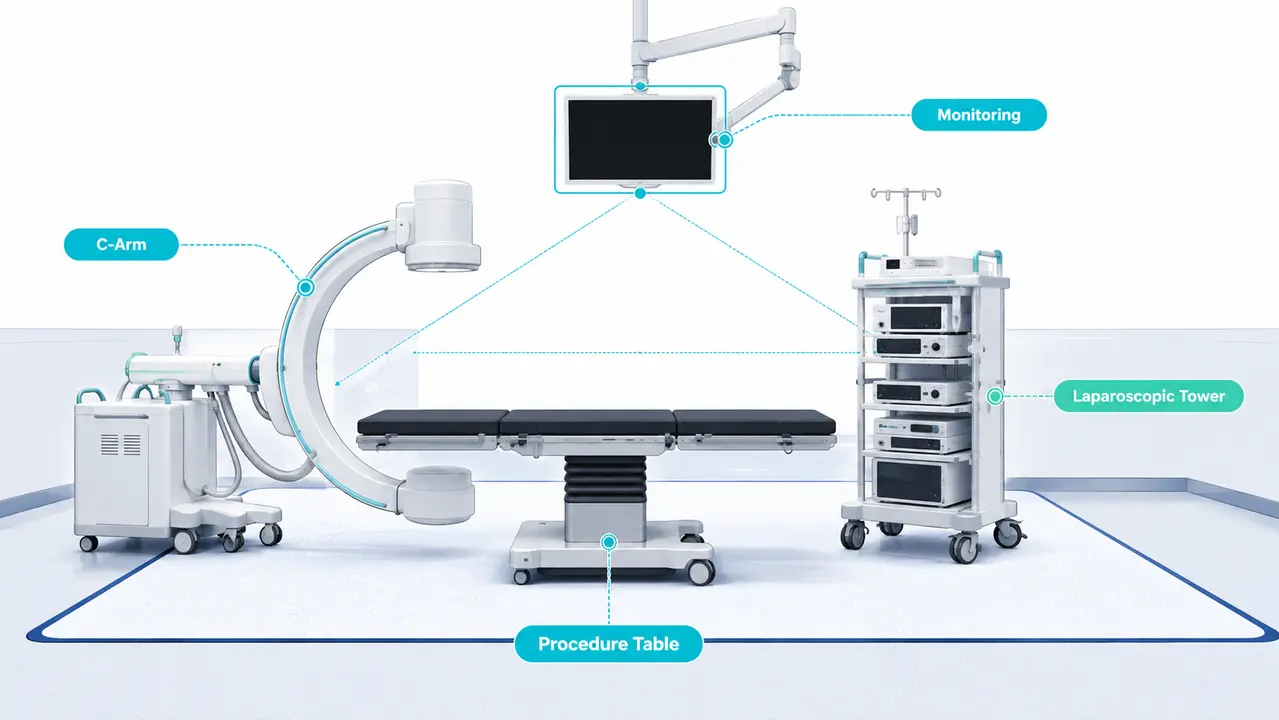
Institutions must evaluate partners through governance maturity, documentation quality, screening rigor, traceability, and facility controls. The physical infrastructure and standards of medical education laboratories dictate the quality of the training or research outcome. A facility must possess surgery rooms with advanced monitoring, imaging, and surgical equipment, including a C-arm and laparoscopic tower. Evaluating a partner requires verifying that the laboratory environment matches the clinical simulation requirements.
Due-diligence questions for procurement and course leadership
| Evaluation Domain | Due-Diligence Question for the Partner |
|---|---|
| Standard Operating Procedures | Are SOPs available for review regarding specimen intake, handling, and storage? |
| Chain-of-Custody | What documentation tracks the specimen from procurement to final disposition? |
| Quality Assurance | How does the facility match donor criteria to specific study protocols? |
| Incident Reporting | What is the protocol for documenting and managing deviations from the study plan? |
Evidence to request without overreach
Institutions should request evidence of compliance and privacy controls while respecting partner confidentiality. A facility should provide redacted consent forms, chain-of-custody logs, and screening attestations. Requesting the full, unredacted medical records of a donor violates privacy obligations. The facility provides the necessary documentation to prove ethical procurement and handling without compromising donor anonymity.
Discuss your study requirements with our laboratory
Tell us your protocol so we can match the right anatomical specimen to your clinical or research objectives.
What logistics and timelines should professionals plan for?
Timelines are driven by death notification speed, screening completion, transfer coordination, and facility capacity. Professional planning must assume variability and build scheduling buffers for labs and CME courses. Intake windows depend on the completion of the eligibility screening and the secure transfer logistics. Documentation lead time affects when a specimen can be scheduled for a study. Contingency planning is necessary if acceptance changes during the screening phase. Whole body donation timelines cannot be guaranteed. A course director planning an emergency skills lab must account for potential delays in specimen procurement. The facility coordinates the import of fresh-frozen specimens according to research needs, which introduces logistical variables. Building schedule flexibility ensures the study proceeds without compromising the screening process.
What happens after research or training is completed?
After permitted use concludes, programs follow a documented, dignified disposition process consistent with consent and local requirements. The facility treats the remains properly under Ministry of Health supervision. Cremation and return options are managed according to the terms of the donation. The process remains respectful and non-graphic. Documentation of completion and disposition confirmation is generated for institutional records. and handled with respect throughout its time in the laboratory.
What misconceptions create risk in professional communication?
Misconceptions involving guaranteed acceptance, assumptions about organ donation compatibility, and vague language undermine trust. A common error is assuming that body donation integrates seamlessly with organ donation pathways. These are distinct processes governed by different consent frameworks and regulatory structures. The phrase donate body to science is a public-facing term that requires precise operational definition in professional contexts. Body donation for medical device testing or surgical training involves strict purpose limitation. Vague language in study protocols or course materials creates reputational risk and undermines the gravity of the anatomical gift.
Preferred terminology for policies and course materials
Safe phrasing and consistent language aligned with respect statements protect institutional credibility. Course materials should use terms like human specimen, anatomical gift, and donor. Avoid terms that commodify the remains or detach the biological material from the human donor. Policies should reflect the operational reality of the donation program, emphasizing consent, screening, and purpose limitation.
Messaging guardrails that protect donor dignity
Avoid ambiguity that can create reputational risk. A device company must not market a product as validated on human subjects if the validation occurred on human anatomical specimens. Course directors must not advertise training events using casual language about cadavers. Messaging must reflect the ethical stewardship governing the facility. Clear, precise communication ensures that the professional use of donated bodies remains transparent and respectful.
Frequently asked questions
Does registering as a donor guarantee that a donation will be accepted?
No, and assuming it does is one of the misconceptions that damages trust. Acceptance depends on eligibility criteria assessed at the time of death, including infectious risk screening, severe trauma and logistical constraints. Programmes communicate this in advance precisely so families are not left with an expectation that cannot be met.
Can someone be both an organ donor and a whole body donor?
These are distinct pathways governed separately, and assuming they integrate seamlessly is a common and consequential error. Organ donation for transplantation and anatomical donation for education and research follow different authorisation routes and different eligibility rules. Professionals communicating with families should treat them as separate decisions.
What documentation should be retained before a study begins?
The core set is documented informed consent, identity verification, the programme terms of use, and the explicit permissions or limitations attached to the donation. Retaining these is what allows a study to demonstrate afterwards that its actual use fell inside the authorised scope.
Is photography permitted in a donor-based laboratory?
Governance artifacts for a donor-based facility typically include a respect statement, staff training requirements, visitor policies and a photography prohibition. Any exception has to be authorised in advance and tied to a specific documented purpose. Confirm the position with the facility as part of study planning rather than assuming it on the day.
How much scheduling variability should be planned for?
Timelines are driven by death notification speed, completion of screening, transfer coordination and facility capacity, none of which can be scheduled in advance. Planning should assume variability and build buffers into lab and course dates rather than treating an intake window as fixed.
What makes a donation ineligible?
Eligibility is programme-specific and turns on safety, logistics and suitability for the intended use. Infectious risk identified at screening, severe trauma affecting the regions required, and logistical constraints around transfer are the usual grounds. Criteria are applied at the time of death rather than at registration.
Human anatomical specimens provide the high-fidelity medium required to validate medical devices and rehearse surgical techniques before clinical application. Securing this biological material depends on a documented lifecycle of consent, screening, and operational compliance managed under Ministry of Health supervision. Planning a study or training event requires accounting for screening timelines, facility controls, and strict governance protocols. Contact our laboratory to discuss your protocol and match the right anatomical specimen to your clinical objective.
Plan your next cadaveric study
Speak with our team about specimen matching, imaging requirements, and laboratory availability.
About Biotech Anatomy

Biotech Anatomy LTD has provided practical anatomy and surgical education from Science Park, Rehovot since 2017. We are the only private Israeli company dedicated to employing human cadaveric material for research, and we operate fully equipped surgery rooms and classrooms with advanced monitoring, imaging and surgical equipment. We support medical teams, academic researchers and medical device developers through the whole study: donor recruitment and matching to the research need, pre-scan imaging, import and preparation of the specimen, trained staff throughout the session, and proper treatment of the remains afterwards, all under Ministry of Health supervision. Specimens are imported fresh-frozen after procurement, and donor information and diagnostic data are made available as far as law and the terms of donation permit. Our facility exists to honour what body donors intended their donation to achieve.