Human Tissue Specimens for Research
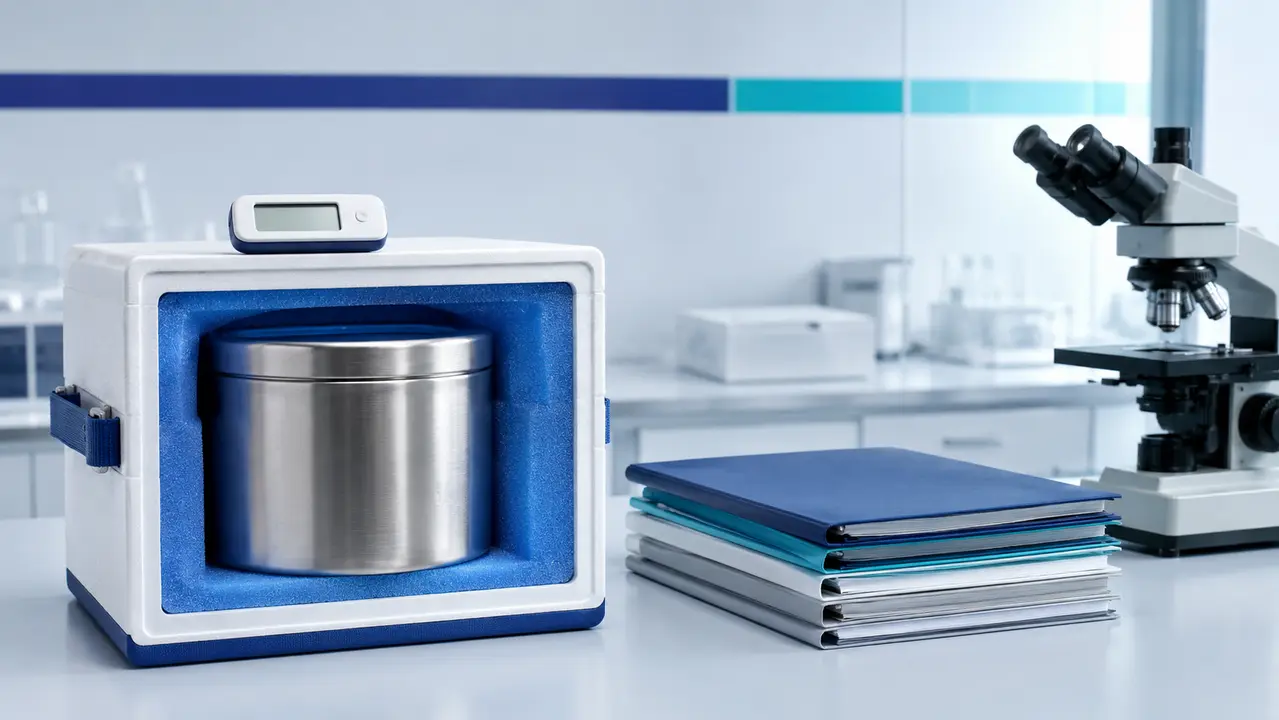
A molecular assay and a surgical validation session demand fundamentally different biological materials. Selecting the wrong preservation format or anatomical scope invalidates downstream results before the study begins.
Reading time: 11 minutes
Key points
- Anatomical specimens and molecular biospecimens serve distinct research endpoints and require different handling.
- Preservation format dictates the operational workflow and limits downstream assay choices.
- Strict chain of custody and cold-chain management are mandatory for valid results.
- Ethical procurement relies on documented consent and Ministry of Health supervision.
Contents
- What are human tissue specimens for research?
- How do you choose the right preservation format?
- What fresh frozen specimens mean operationally
- Documentation accompanying human tissue specimens
- Chain of custody for biospecimens
- How tissue procurement is performed ethically
- Specimen types typically available in a catalog
- Defining inclusion and exclusion criteria without overconstraining
- Quality controls reasonable to expect for research specimens
- Packaging and shipping fresh frozen specimens
- How long tissue procurement takes and timeline variability
- Specimen requests supporting medical device R&D
- Why specimen procurement projects fail and how to prevent them
What are human tissue specimens for research?
Human tissue specimens for research are donated biological materials provided for scientific, educational, or development purposes under strict ethical, legal, and quality controls. We categorize these materials into two distinct groups. A general biospecimen typically refers to fluid or molecular samples processed for genomic, proteomic, or cellular analysis. An anatomical specimen involves intact structures or whole organs utilized for device testing or surgical simulation training. This distinction matters for ethics review, assay selection, and reproducibility. Research-use-only human tissue requires precise categorization to ensure the physical material matches the downstream method. Anatomical specimens support practical educational environments, a principle central to cadaver lab anatomy. We classify every donation against the specific requirements of the principal investigator or device engineer.
Common specimen categories used in R&D and academic research
Categories include fresh, fresh frozen, formalin-fixed paraffin-embedded, and cryopreserved tissue. Each category serves distinct scientific endpoints.
What anatomical specimens mean in a surgical education and device R&D context
Anatomical specimens involve intact structures or whole organs used for device testing or surgical simulation training, contrasting with molecular biospecimens. A device engineer evaluating a new laparoscopic grasper requires intact peritoneal layers and realistic tissue plane variability. A molecular biologist requires extracted nucleic acids. We manage the former, maintaining the structural integrity of the torso, cephalous (head), Cordis (heart), pelvic, or extremity regions for physical interaction.
How do you choose the right preservation format?
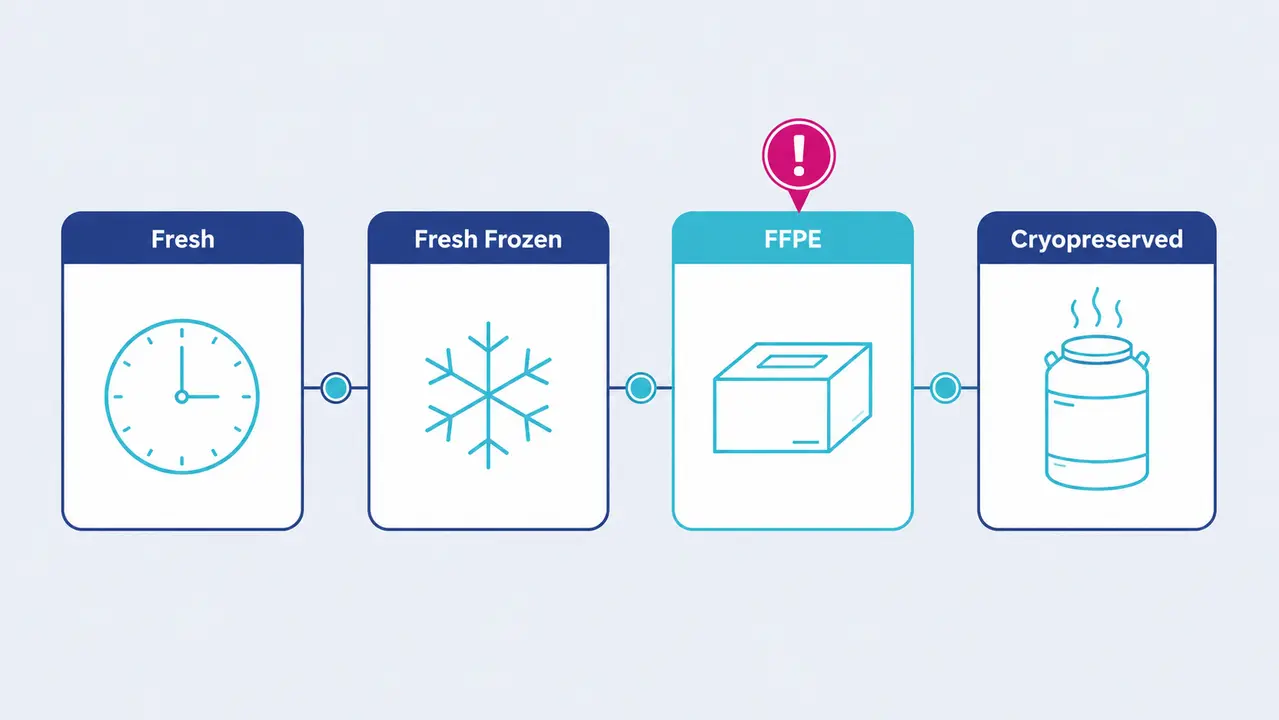
Format selection depends entirely on the downstream method and the acceptable trade-off between morphology, molecular integrity, and logistics. If you need standard histology, prioritize formalin-fixed paraffin-embedded blocks. If you need RNA-based assays, prioritize rapid freezing. We advise teams to map the endpoint to the format before submitting a request. Fresh frozen human tissue preserves nucleic acid integrity but requires strict cold-chain management. Frozen tissue specimens degrade rapidly if handling protocols slip. FFPE tissue blocks offer excellent morphological stability but cross-link nucleic acids, limiting molecular yield. Cryopreserved tissue maintains cell viability for live-cell assays but requires controlled-rate freezing. The choice dictates the entire operational workflow.
| Format | Typical downstream uses | Key advantages | Key limitations | Logistics considerations | Documentation and QC commonly requested | When to avoid |
|---|---|---|---|---|---|---|
| Fresh | Live-cell assays, immediate surgical simulation | Maximum tissue flexibility and viability | Rapid degradation window | Immediate transport, strict time limits | Recovery timestamp, viability confirmation | Studies requiring long-term storage |
| Fresh Frozen | RNA sequencing, proteomics | High molecular integrity | Ice crystal artifacts in morphology | Dry ice shipping, continuous cold chain | Freezing timestamp, temperature logs | Routine histological review |
| FFPE | Histology, immunohistochemistry | Room temperature stability, excellent morphology | Nucleic acid cross-linking | Standard ambient shipping | Fixation duration, block processing records | Downstream RNA sequencing work |
| Cryopreserved | Cell culture, viability assays | Maintains cell viability over time | Requires cryoprotectants, specialized thawing | Liquid nitrogen vapor shippers | Cryoprotectant used, storage temperature logs | Structural biomechanical testing |
What is fresh frozen tissue, and when is it preferred?
Fresh frozen tissue is preferred for RNA-based assays and sensitive molecular work. Rapid freezing minimizes nuclease activity and preserves the transcriptome.
What is FFPE tissue, and when is it preferred?
FFPE tissue is preferred for standard histology and immunohistochemistry. The formalin fixation process provides long-term stability and preserves architectural detail.
What is cryopreserved tissue, and when is it preferred?
Cryopreserved tissue is preferred when maintaining cell viability for live-cell assays is the primary endpoint. Cryoprotectants prevent ice crystal formation during controlled-rate freezing.
What fresh frozen specimens mean operationally
Fresh frozen specimens are tissue recovered and frozen under controlled conditions within a defined time window, then stored and shipped under continuous cold-chain requirements. A usable custom specimen request must specify tissue type, target mass, exact dimensions, timing constraints, and intended assays. We process fresh frozen specimens by flash-freezing the tissue in liquid nitrogen vapor immediately following recovery, documenting the exact minute of ischemia onset and freezing. The tissue remains at minus eighty degrees Celsius until the destination lab thaws it for extraction. Any deviation in the cold chain compromises the RNA integrity number, rendering the tissue unsuitable for sequencing. We enforce strict temperature monitoring logs throughout storage and transit to prevent these deviations.
Minimum request fields that prevent avoidable back-and-forth
Requests must include anatomic site, laterality, minimum size, number of aliquots, container preferences, and sterility needs. Ambiguity in these fields delays feasibility assessment.
Acceptance criteria and what you will not accept on receipt
Defining acceptance criteria upfront protects study integrity. The destination lab must reject any specimen arriving outside the specified temperature range or with compromised packaging.
Documentation accompanying human tissue specimens
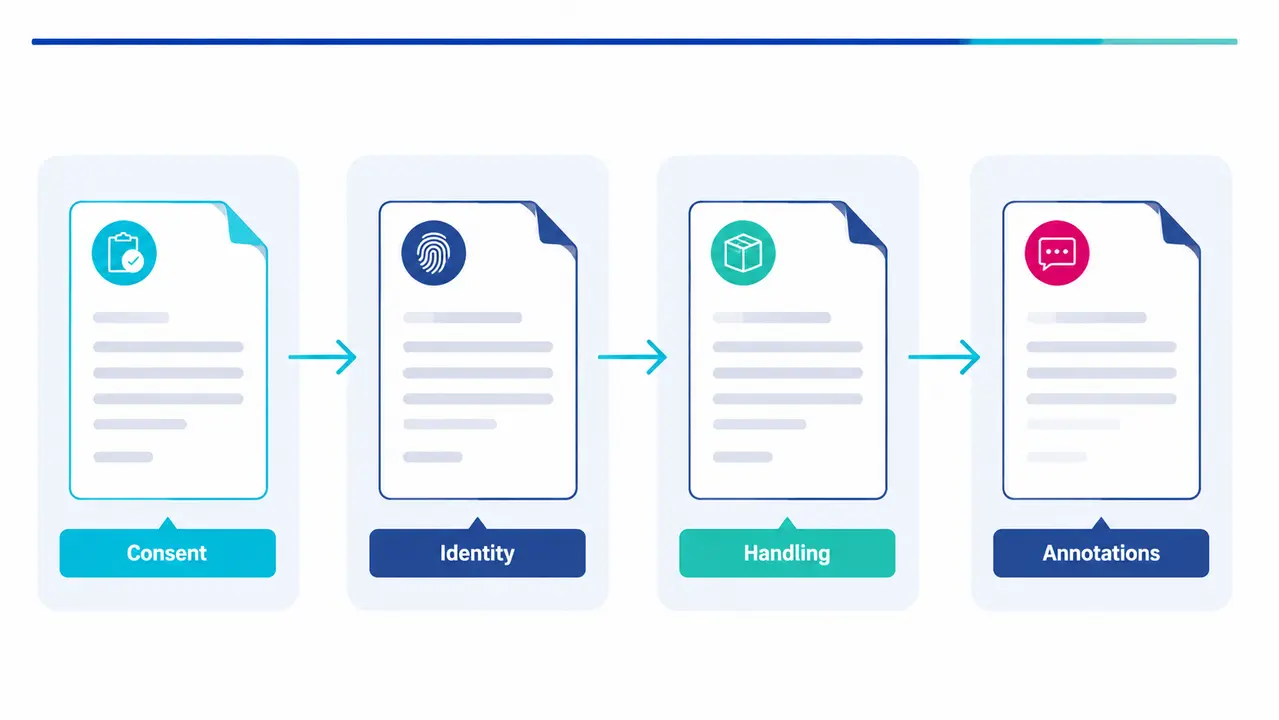
Documentation must support ethical provenance, donor eligibility screening, specimen identity control, handling history, and the data dictionary for clinical annotations. We build an audit-ready packet that a sponsor, principal investigator, or quality assurance function expects to see. This packet verifies that the donation occurred under proper consent and that the physical material matches the associated records. Specimen traceability relies on this documentation chain. We align our documentation practices with established frameworks, such as the best practices for biospecimen resources published by the National Cancer Institute. The packet includes the de-identified clinical annotations that define what available data means in a practical sense for the research team.
Donor consent and provenance documentation
Consent verification confirms the donor authorized research use. We verify this authorization before any tissue enters our facility, operating strictly under Ministry of Health supervision.
Specimen labeling, unique IDs, and traceability essentials
Standard labeling protocols require a unique identifier on every primary container. This ID links the physical specimen to the donor record and the processing log.
Clinical annotation summary and data dictionary expectations
Available data includes age, weight, BMI, clinical conditions, and prior surgeries. We provide this data as de-identified clinical annotations linked to the unique specimen ID.
Chain of custody for biospecimens
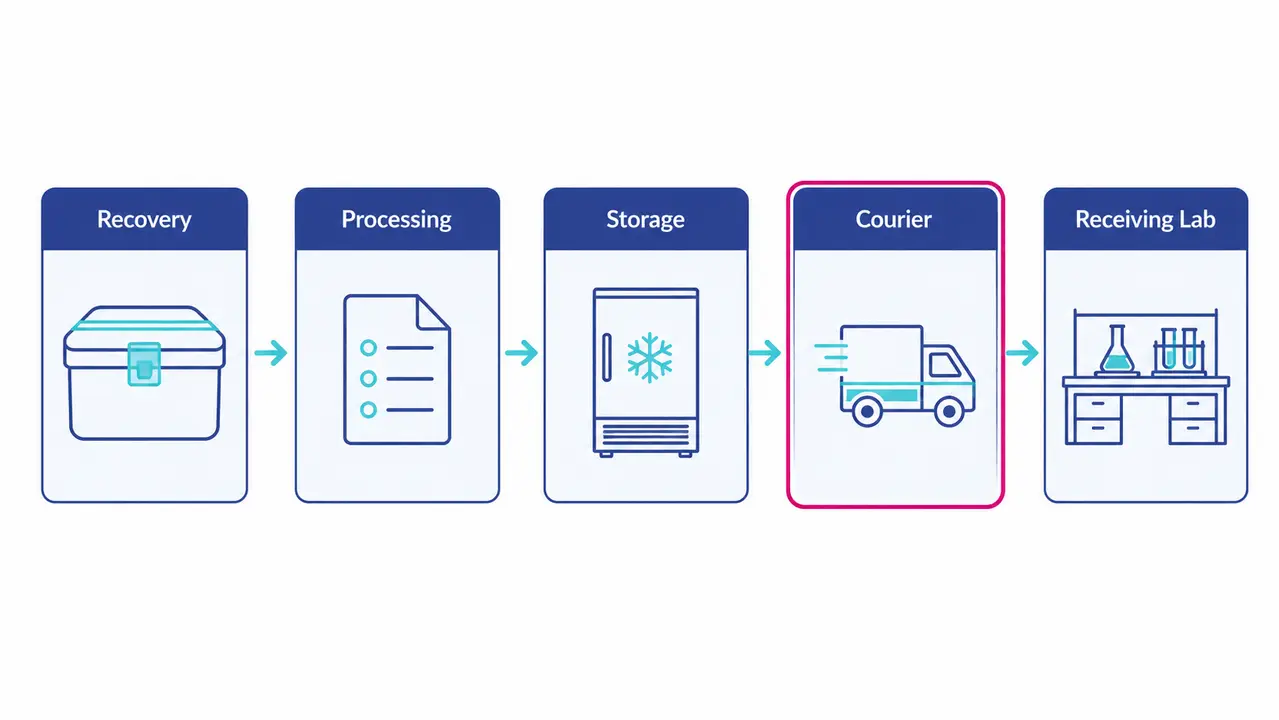
Chain of custody is the documented, continuous record of specimen control from recovery through storage, shipment, and receipt. We record every handoff in the tissue procurement process. The documented chain begins with the recovery team, moves to processing, then to storage, the courier, and finally the receiving lab. At each stage, we log timestamps, environmental conditions, responsible parties, and any deviations. Chain of custody documentation reduces mix-ups, supports quality investigations, and strengthens confidence in results. A broken chain invalidates the study. If a temperature logger fails during transit, the receiving lab must quarantine the specimen until a documented investigation determines if the material remains fit for purpose. We provide the complete handoff log to the destination lab upon delivery, ensuring the receiving team has full visibility of the specimen history.
How tissue procurement is performed ethically
Ethical procurement requires documented donation authorization, respect-centered handling, privacy protection, and defined governance. We operationalize respect through our facility workflows. The working environment is kept sterile, tidy, and respected. A professional team handles the entire process, and environmental and safety officers guarantee best practice according to guidelines. This operational discipline is how we honor the donation. The ethical sourcing of human specimens dictates that donors are never processed as commodities. We maintain strict separation between identifying donor data and the physical specimen. These materials are utilized in professional medical education laboratories where surgical teams train under the same sterile protocols as clinical operating rooms. Medical breakthroughs became possible due to body donors, and we honor that contribution through rigorous operational standards.
What respect looks like in a professional facility workflow
Professional workflow standards require non-sensational handling. We maintain a quiet, controlled environment focused on scientific and educational objectives.
Privacy and de-identification principles professionals should confirm
Data is separated from the physical specimen through coded identifiers. The link between the code and the donor identity remains secured within the procurement system.
Specimen types typically available in a catalog
A specimen catalog organizes availability by anatomical region, tissue type, preservation format, donor characteristics, and supporting data. We maintain a catalog to help researchers assess feasibility and achieve rapid alignment for their studies. Banked inventory specimens offer immediate availability for projects where exact prospective matching is not required. Catalogs are best used for feasibility checks, not as a substitute for a written request. A researcher reviewing the catalog can see if banked inventory specimens match their general parameters before committing to a custom procurement. We update the catalog continuously as new materials are processed and validated. This allows device teams to plan evaluation sessions around available tissue rather than waiting for a prospective collection cycle.
How to read catalog fields
Standard catalog terminology includes format, aliquots, annotations, and constraints. Understanding these fields prevents requesting material unsuitable for the intended assay.
When a custom procurement is more appropriate
Prospective collection is appropriate when a study requires highly specific matched tissue sets or specific clinical histories not available in banked inventory.
Defining inclusion and exclusion criteria without overconstraining
We advise starting with assay-critical variables while keeping non-critical preferences flexible. Overly narrow criteria is the most common reason timelines slip. A device team might request a specific age range, a specific BMI, and a specific prior surgery status. If the clinical question only requires the target tissue to be free of prior surgical alteration in that specific anatomic region, the age and BMI constraints artificially constrain the donor pool. Prospective tissue collection depends on donor availability. We help researchers separate the variables that directly impact the study endpoint from those that represent an idealized patient profile. Matched tissue sets require clear parameters. For a molecular study, the diagnosis context and treatment exposure are must-have criteria. For device R&D, anatomic site precision and tissue condition are must-haves.
Quality controls reasonable to expect for research specimens
Reasonable quality control focuses on identity control, handling conditions, preservation confirmation, and fit-for-purpose checks aligned to endpoints. We provide a QC checklist that includes labeling verification, condition on receipt, temperature monitoring evidence, deviation reporting, and optional pathology review. Fit-for-purpose quality control means the QC matches the specific study protocol. We do not apply a one-size-fits-all approach. Sample integrity acceptance criteria depend on the downstream assay. A specimen intended for biomechanical testing has different integrity requirements than a specimen intended for RNA extraction. We align our practices with regulatory standards for current good tissue practice, such as those detailed in 21 CFR Part 1271. This ensures our handling and processing controls meet recognized benchmarks.
Fit-for-purpose QC versus one-size-fits-all QC
QC should match the specific study protocol. A biomechanical test requires intact tissue planes, while a genomic assay requires rapid freezing.
Deviation handling when something goes off-spec
The documentation and notification process requires immediate quarantine of the specimen. We notify the study sponsor and document the deviation in the chain of custody log.
Packaging and shipping fresh frozen specimens
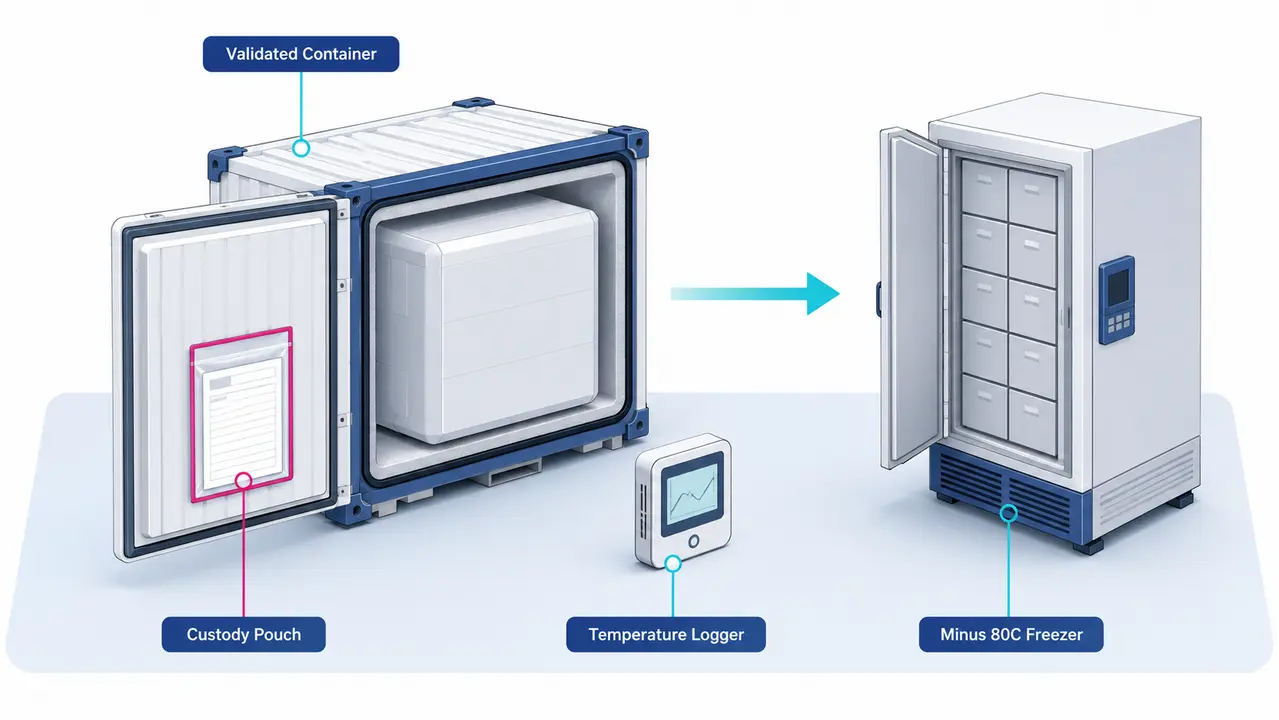
Fresh frozen specimens require validated cold-chain packaging, clear labeling, and defined receiving procedures to ensure immediate transfer to appropriate storage. We coordinate the ship window, receiving hours, and temperature monitoring approach. Cold chain shipping relies on dry ice or liquid nitrogen vapor shippers depending on the required temperature. We include a digital temperature logger in every shipment to provide objective evidence of the cold chain. The destination lab must execute a receiving and accessioning checklist upon delivery. This checklist dictates the exact steps the receiving lab must take. We provide the temperature monitoring logs and the chain of custody document in a secured pouch on the exterior of the shipping container. Immediate transfer to a minus eighty degrees Celsius freezer prevents thaw-related degradation.
Receiving checklist for the destination lab
Steps include verifying the shipping container integrity, checking the temperature logger data, confirming the unique IDs against the manifest, and transferring the specimen to storage.
How long tissue procurement takes and timeline variability
Timelines depend on inventory selection versus prospective collection, criteria specificity, and required documentation. We provide a practical timeline framework without making specific time promises. Biospecimen procurement services operate on biological timeframes, not manufacturing schedules. If a study requires a rare anatomical presentation, the timeline depends entirely on donor availability. The main timeline drivers are rarity, data requirements, format, and coordination constraints. A request for a standard fresh frozen specimen from banked inventory can ship rapidly. A request for a prospectively collected, multi-region matched tissue set with specific imaging requirements requires a longer coordination window. We establish the expected timeline during the feasibility intake and update the sponsor if donor availability shifts.
Specimen requests supporting medical device R&D
A strong request translates procedural or engineering needs into specimen attributes, documentation needs, and handling constraints while staying respectful and purpose-driven. We tailor these requests for surgeons, course directors, and device teams. Anatomical specimens for device testing require specific structural parameters. Surgical education specimens require intact tissue planes. Translational research biospecimens require specific molecular preservation. A typical request includes the anatomic region, imaging preference, documentation packet, and handling constraints. For example, a team evaluating a new spinal implant requires intact vertebral columns and pre-session CT imaging to assess bone density. We support medical device testing by providing the human pre-clinical model necessary before a clinical study. Our facility provides surgery rooms with advanced monitoring, imaging, and surgical equipment, including a C-arm and laparoscopic equipment.
Request template fields for device evaluation and training programs
Fields include target anatomic region, required imaging modality, sterility level, required instrumentation, and specific structural integrity parameters.
Documentation and reporting outputs for QA and regulatory teams
Final documentation supports regulatory submissions by providing the donor eligibility screening, chain of custody, and handling logs required for audit trails.
Why specimen procurement projects fail and how to prevent them
Most failures stem from unclear acceptance criteria, unrealistic timelines, mismatched preservation format, or missing receiving readiness. Prevention requires a structured intake. We conduct a feasibility intake first, followed by a written specification, then controlled logistics. A pre-mortem checklist prevents project collapse. We require the requesting team to confirm the format, minimum size, annotations, documentation, receiving standard operating procedure, and deviation plan before we initiate procurement. If a destination lab lacks a minus eighty degrees Celsius freezer to accept a fresh frozen specimen, the project will fail upon delivery. If a team requests FFPE tissue for an RNA sequencing study, the molecular yield will fail. We intervene during the feasibility stage to realign these mismatches. Operating since 2017, our facility manages these constraints to ensure the physical material arrives at the destination lab ready to generate valid data.
Discuss your specimen requirements with our laboratory
Tell us what your study needs so we can map the preservation format, anatomical scope, and documentation to your protocol.
Frequently asked questions
FFPE or fresh frozen for an RNA-based assay?
Fresh frozen. Format selection follows the downstream method and the acceptable trade-off between morphology, molecular integrity and logistics. Formalin-fixed paraffin-embedded blocks are the right choice for standard histology, while RNA-based work needs the molecular integrity that only controlled freezing preserves.
What makes a specimen request unusable?
Leaving the physical parameters undefined. A usable custom request specifies tissue type, target mass and exact dimensions, alongside the preservation format. Without those, the request cannot be matched against inventory or planned as a prospective collection.
Why do very specific inclusion criteria delay a project?
Overly narrow criteria are the single most common reason timelines slip. A request combining a narrow age range, a specific BMI and a particular prior surgical history may match almost nothing. Start from the variables that are genuinely assay-critical and keep the rest flexible.
What quality control is reasonable to expect on receipt?
Identity control, handling conditions, preservation confirmation and fit-for-purpose checks against your endpoints. In practice that means labelling verification, documented condition on receipt and temperature monitoring across the shipment rather than a general assurance of quality.
What has to be in place before fresh frozen specimens ship?
Validated cold-chain packaging, clear labelling and defined receiving procedures, so material moves into appropriate storage immediately on arrival. The ship window, the receiving hours at your site and the temperature monitoring approach are agreed in advance, because an unattended delivery breaks the cold chain.
Matching the preservation format to the downstream method and defining clear acceptance criteria prevents avoidable failures in human tissue research. We provide the anatomical specimens, the audit-ready documentation, and the controlled facility required to generate valid data. Contact our laboratory to discuss your protocol and specimen requirements.
About Biotech Anatomy

Biotech Anatomy LTD has provided practical anatomy and surgical education from Science Park, Rehovot since 2017. We are the only private Israeli company dedicated to employing human cadaveric material for research, and we operate fully equipped surgery rooms and classrooms with advanced monitoring, imaging and surgical equipment. We support medical teams, academic researchers and medical device developers through the whole study: donor recruitment and matching to the research need, pre-scan imaging, import and preparation of the specimen, trained staff throughout the session, and proper treatment of the remains afterwards, all under Ministry of Health supervision. Specimens are imported fresh-frozen after procurement, and donor information and diagnostic data are made available as far as law and the terms of donation permit. Our facility exists to honour what body donors intended their donation to achieve.