Structuring Cadaver Courses by Surgical Specialty
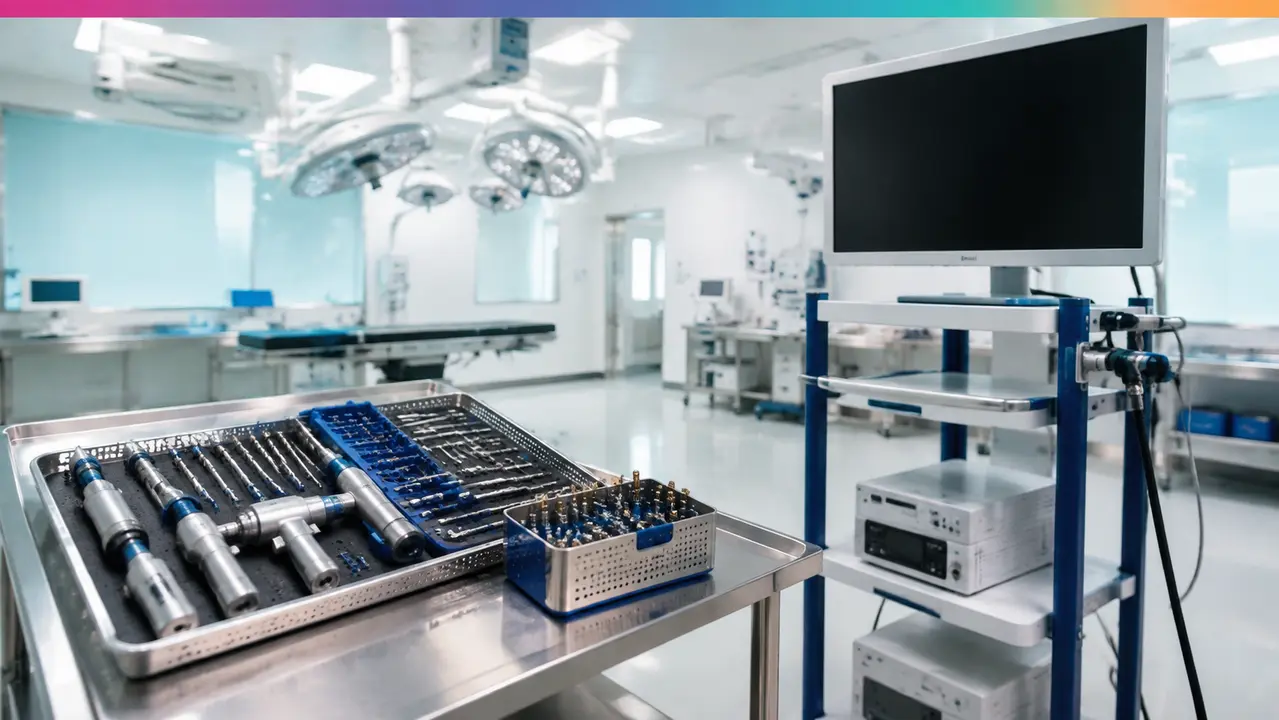
A cadaveric specimen presents the exact tissue plane variability and anatomical constraints a surgeon will encounter in the operating room. Organizing training by specialty means adjusting station design, imaging requirements, and the balance between anatomical orientation and procedural rehearsal to match those specific constraints.
For a course director, this targeted approach ensures specialty-appropriate assessment, case selection, and technical coaching. A generic wet lab cannot validate the sequential steps of a spinal approach or the narrow corridor navigation required in otolaryngology. The curriculum, instrumentation, and lab environment must be tailored to the procedural requirements of the specific surgical discipline.
Reading time: 8 minutes
Key points
- Specialty organization tailors station design, imaging, and specimen type to specific procedural constraints.
- Course structure must align with the primary objective, separating technical refinement from preclinical device evaluation.
- Facility readiness dictates educational validity, requiring verified imaging integration and standardized instrumentation.
- Strict governance and documented chain-of-custody protocols are required to honor donor contributions and ensure auditability.
Contents
- What does specialty organization mean in surgical education?
- Which specialties most commonly use cadaver workshops?
- Choosing the right course for your role
- What a high-quality hands-on specialty course includes
- Anatomy-first versus procedure-first cadaver courses
- How long should a cadaver workshop be?
- Verifying facility capabilities for specialty training
- Documentation and governance for course directors
- Supporting medical device R&D and clinical affairs
- Specialty examples illustrating course structure in practice
- Comparing courses without relying on marketing claims
- Common pitfalls in cadaver workshops
- Stand-alone training versus pre-conference workshops
What does specialty organization mean in surgical education?
Cadaver courses by specialty are hands-on educational experiences where the curriculum, instrumentation, and lab environment are tailored to the procedural requirements of a specific surgical discipline or subspecialty. Organizing training by specialty means adjusting station design, imaging requirements, and the balance between anatomical orientation and procedural rehearsal.
For course directors, this targeted approach ensures specialty-appropriate assessment, case selection, and technical coaching. A station built for minimally invasive procedures requires different integration than a station built for plastic and reconstructive surgery. The structural and educational differences of a specialty cadaver course dictate how faculty interact with trainees, how progress is measured, and what constitutes a completed workflow.
Anatomy-based surgical education provides the framework for this structural variation. By defining the educational output first, planners can determine the required specimen type, the necessary visualization equipment, and the exact instrumentation needed for the targeted specialty level.
Which specialties most commonly use cadaver workshops?
Specialties involving complex three-dimensional anatomy, narrow operative corridors, or high-stakes technical steps frequently rely on these training formats. Sub-specialty surgical training is driven by the need for exposure planning, sequence discipline, and complication-avoidance decision-making.
Spine, orthopedics, ENT/head and neck, neurosurgery, and plastics/reconstructive surgery represent the primary beneficiaries of this approach. An orthopedic cadaver workshop requires robust fixation hardware and drilling equipment, while an ENT cadaver lab course depends on endoscopic tower readiness and specialized micro-instruments. The structural requirements of a cadaver workshop for surgeons change completely based on the anatomical region targeted.
These fields rely on cadaveric surgical training because synthetic models cannot reproduce the tactile feedback of real tissue planes or the spatial constraints of an actual operative corridor. The driving need for these specialties is the ability to practice complication-avoidance strategies in a controlled environment before encountering them in a live patient.
Choosing the right course for your role
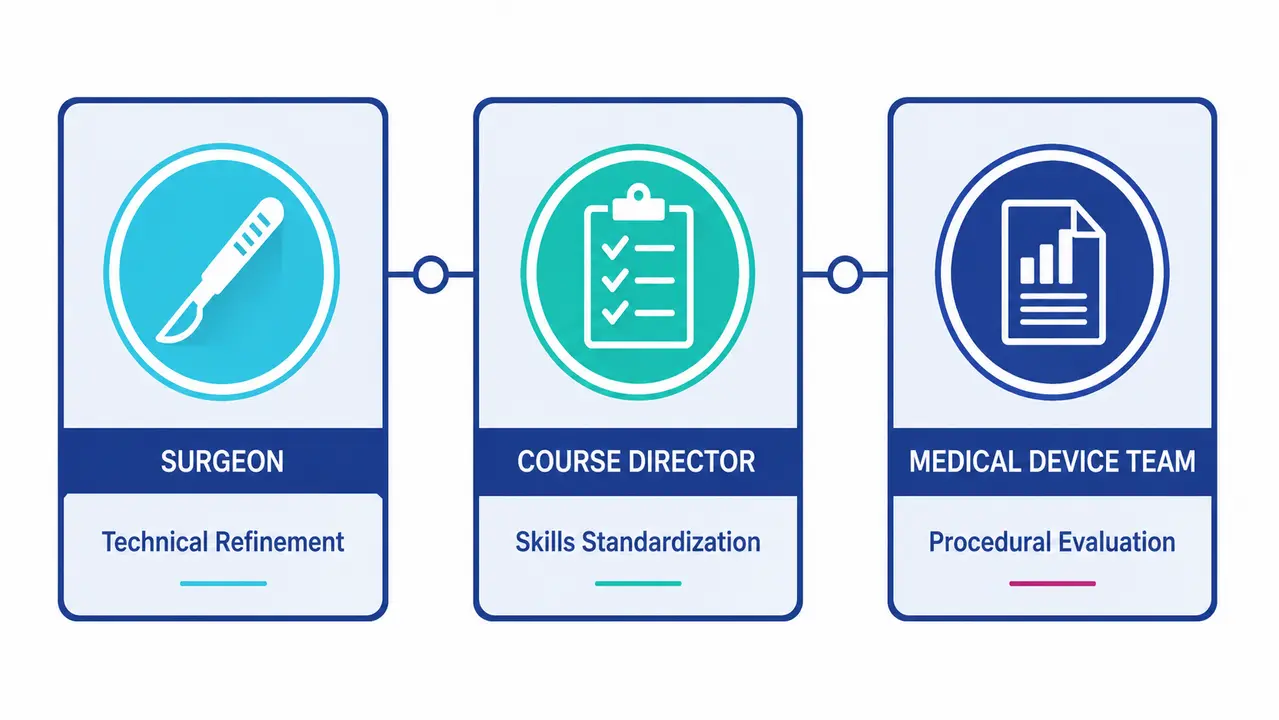
Selection criteria for a hands-on specialty course depend entirely on the reader’s primary objective. Individual technical refinement, program-level skills standardization, and preclinical procedural evaluation require fundamentally different setups.
Surgeons often prioritize repetition and tips-and-traps workflows. They need time at the station to rehearse a specific approach, such as a foot and ankle reconstruction, until the muscle memory is established. Course directors focus on reproducible stations and faculty calibration to ensure every trainee receives the same baseline instruction. Medical device teams prioritize protocol control, documentation, and data capture for usability observations.
Evaluating a cadaver lab training facility requires matching the physical environment to these distinct roles. A preclinical procedural evaluation demands strict variable control and documented clinical affairs training support, whereas a surgical skills session prioritizes high-volume repetition and immediate faculty feedback.
What a high-quality hands-on specialty course includes
A robust curriculum requires explicit learning objectives, a coached station workflow, and structured feedback. Unstructured lab access does not produce measurable educational outcomes. Effective course design includes pre-course preparation, stepwise station checklists, and post-station debriefing. Strong programs define what competence looks like for the targeted specialty level, whether for residents, fellows, or attendings. Establishing clear learning objectives is a fundamental requirement of curriculum design in medical simulation, as outlined by NCBI resources on simulation curriculum structure.
What learning objectives look like for surgical specialty training
Objectives must be procedural and measurable. A course director cadaver workshop planning session should define the exact sequence, exposure requirements, and instrument handling expectations for each station. Measurable objectives rely on a skills assessment checklist or global rating scales to determine if the trainee has achieved the target competency. Without these instruments, faculty cannot objectively evaluate whether the trainee has successfully completed the required workflow.
How faculty coaching is structured in effective cadaver workshops
Faculty alignment on technique steps and feedback language reduces variability and improves learner confidence. In a faculty-led hands-on course, instructors must agree on the critical actions required at each station. Station-based surgical training fails when different faculty members correct the same technical step in contradictory ways. Pre-course calibration ensures that every coach reinforces the same procedural sequence and uses the same assessment criteria.
Anatomy-first versus procedure-first cadaver courses
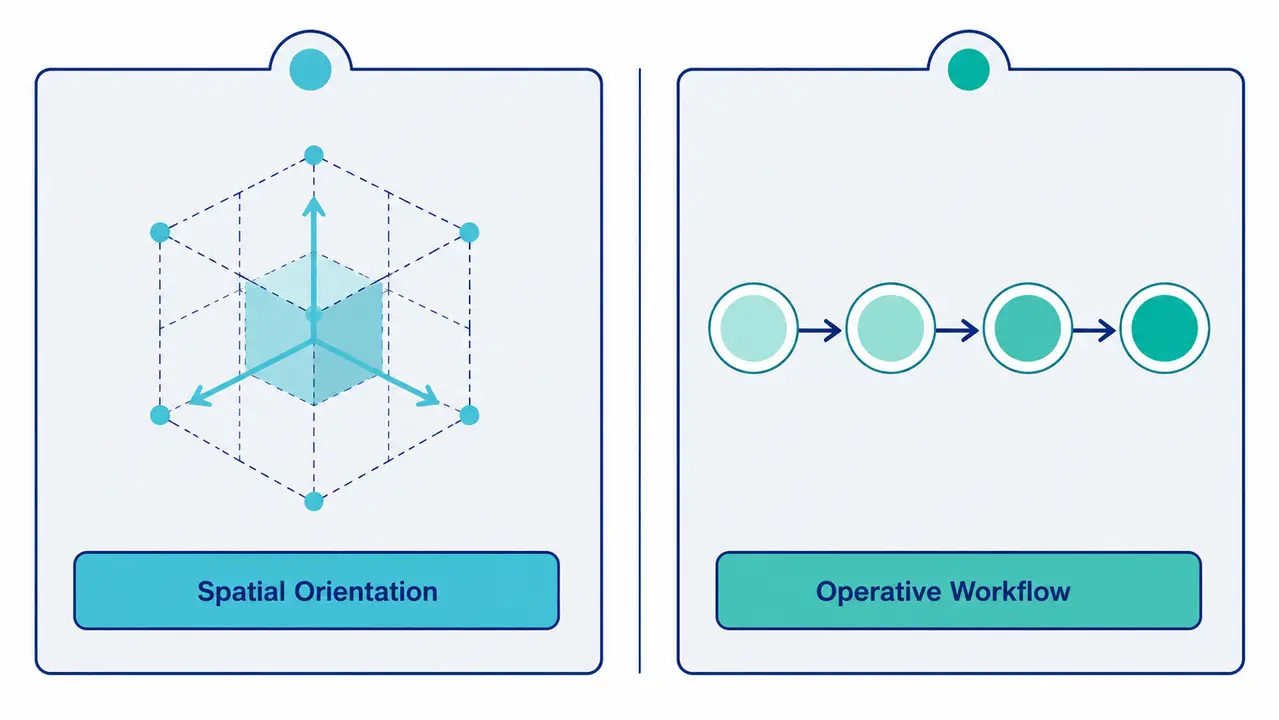
Anatomy-first courses prioritize spatial orientation and structural understanding. These formats are often ideal for new fellows or cross-specialty transitions where the learner needs to understand the three-dimensional relationships of the cephalous (head) or pelvic region before attempting a procedural workflow. Cadaver lab anatomy provides the foundational mapping required for safe surgical practice.
Procedure-first courses focus on executing a defined operative workflow under coaching. These are suited for technique standardization and the adoption of new surgical approaches. A procedure-based cadaver course requires the trainee to navigate tissue planes, manage instruments, and complete the sequence just as they would in an operating room.
Many training programs blend both approaches, but one typically dominates the educational design based on the specialty’s needs. A surgical skills lab might dedicate the first hour to anatomical orientation and the remaining time to procedural rehearsal, ensuring the trainee understands the structural context before executing the workflow.
| Course Format | Primary Focus | Ideal Audience |
|---|---|---|
| Anatomy-first | Spatial orientation and structural understanding | New fellows or cross-specialty transitions |
| Procedure-first | Executing a defined operative workflow under coaching | Technique standardization and adopting new approaches |
| Blended model | Initial structural context followed by procedural rehearsal | Trainees needing context before executing workflows |
How long should a cadaver workshop be?
The duration of a cadaver workshop should be driven by the number of discrete workflows requiring practice with feedback cycles. A specialty cadaver course should not be scheduled by tradition or convenience. A systematic review of cadaveric workshops in higher surgical training, available via PMC, demonstrates that effective skill acquisition depends heavily on structured repetition and feedback rather than mere time spent in a lab.
One-day formats are suitable for single-workflow training or exposure-focused modules. Two-day formats better support multiple approaches and bilateral practice, allowing trainees to correct mistakes on the contralateral side. Modular designs can effectively separate fundamentals from advanced techniques for mixed-experience cohorts.
How to plan station timing and repetition
Building time for setup, coached attempts, troubleshooting, and debrief is essential for technique stabilization. Station-based surgical training requires strict time discipline to ensure every trainee completes the required repetitions. A skills assessment checklist helps faculty track progress and determine when a trainee is ready to advance to the next procedural step.
Verifying facility capabilities for specialty training
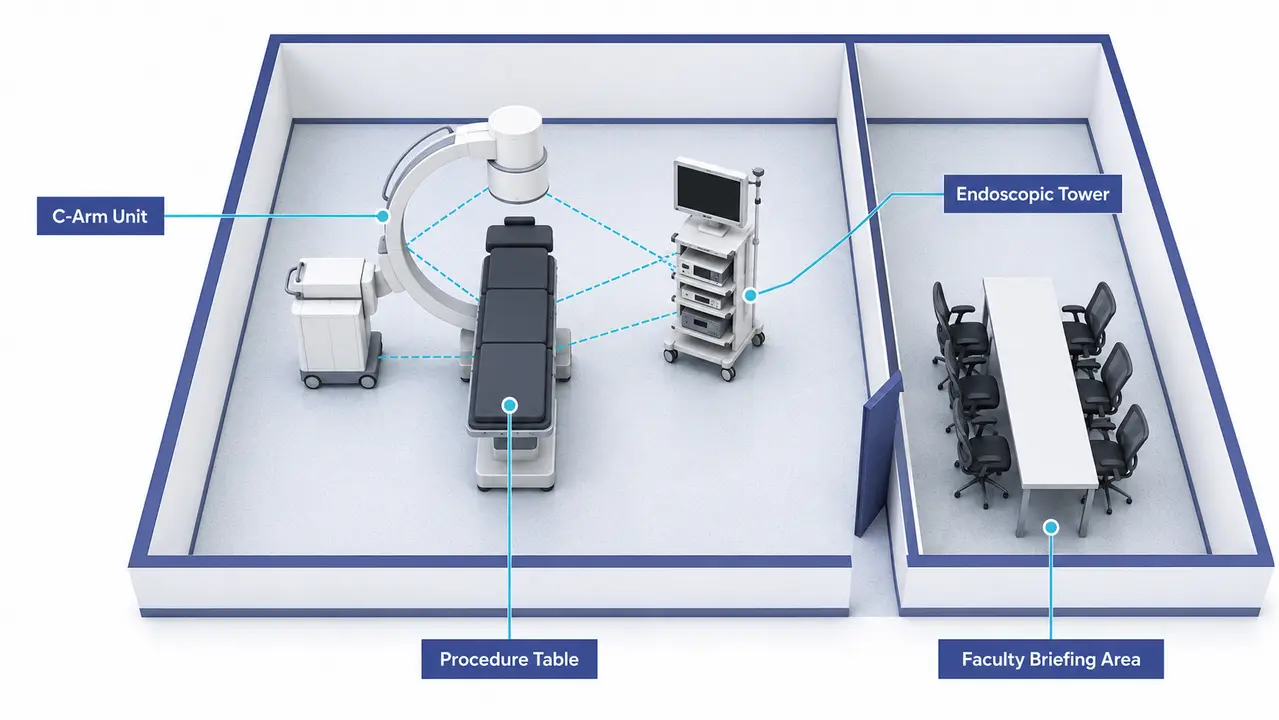
Planners must verify a facility’s ability to support their specialty’s workflow end-to-end. Specialty needs vary heavily. A spine cadaver lab course requires imaging integration and positioning workflows, an endoscopic cadaver course requires tower readiness, and a microsurgery training lab requires specialized training support. Smooth classroom-to-lab transitions and adequate faculty briefing space are non-negotiable for maintaining schedule integrity. The physical capabilities of the cadaver lab training facility dictate what procedural workflows are possible.
Imaging and visualization readiness
Confirming availability, room compatibility, and operational support for imaging-dependent steps is mandatory. An endoscopic cadaver course requires functional towers and monitors positioned for ergonomic viewing. Neurosurgery cadaver lab training often requires intraoperative imaging feedback to validate trajectory and placement. If a facility cannot guarantee functional imaging integration, the educational validity of the session is compromised.
Instrumentation, disposables, and specialty trays
Consistent station configuration and specialty-specific instrument sets are required across all training groups. An orthopedic cadaver workshop requires drilling systems, fixation hardware, and specialized retractors. A surgical skills lab must ensure that every station is stocked identically to prevent training disparities. Faculty and facility staff must verify that all disposables and specialty trays are prepared before the trainees enter the room.
Documentation and governance for course directors
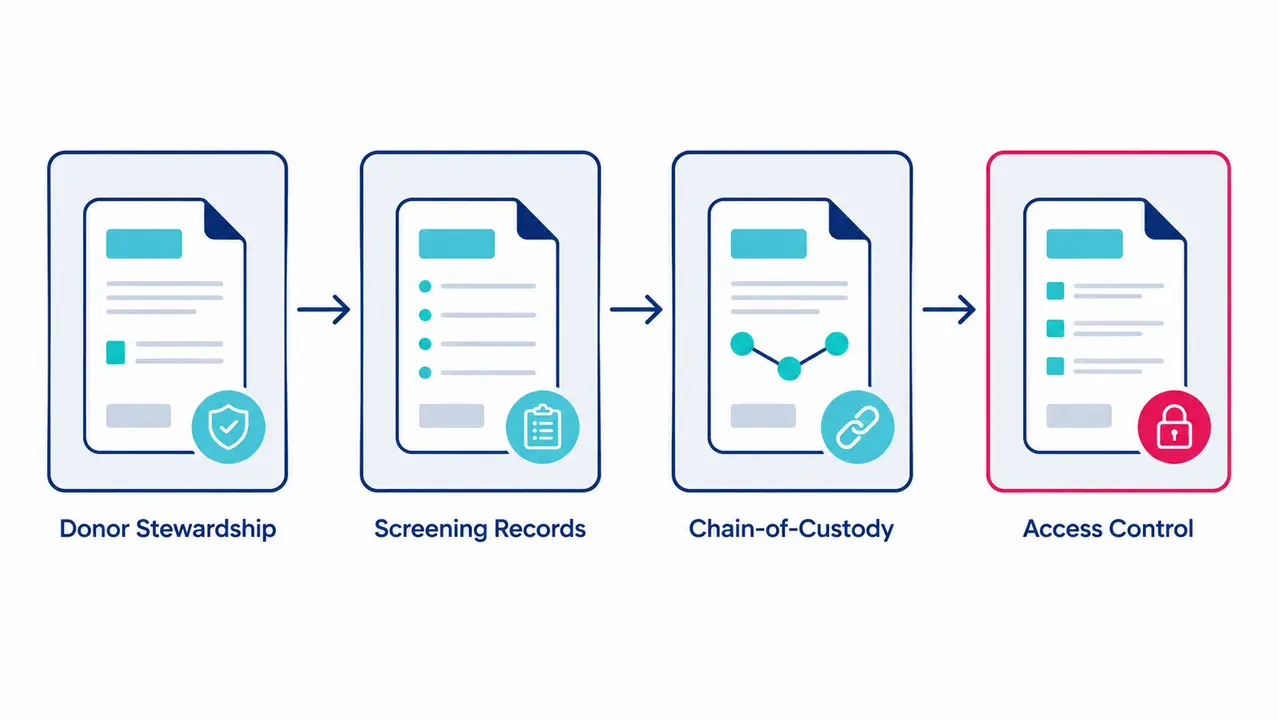
Professionals must request clear governance around donor stewardship, screening documentation availability, and chain-of-custody documentation processes aligned with institutional expectations. Traceability, ethical stewardship, and lab governance and SOPs for access control and environmental safety are non-negotiable standards. The Human Tissue Authority’s anatomy licensing standards and guidance provide a reliable framework for evaluating screening and traceability expectations.
For international participants or device teams, documentation readiness and auditability are decisive factors. A donor stewardship statement of respect must be operationally proven by the facility’s SOPs. Medical breakthroughs depend on body donors, and honoring that contribution requires sterile, tidy, and respected working environments maintained by professional teams under strict safety guidelines.
Supporting medical device R&D and clinical affairs
These courses provide a realistic procedural environment to evaluate usability, workflow integration, and technique-device interaction prior to clinical planning. A cadaver lab for medical device testing allows engineers to observe how a new instrument interacts with fresh-frozen tissue planes. Medical device testing in a human anatomical model provides preclinical procedural evaluation data that synthetic simulators cannot generate. Clinical affairs training support relies on structured observation, consistent station setup, and documentation discipline for regulatory alignment. Typical use cases include formative usability studies, design iteration feedback, and training program development for launch readiness.
What good looks like for a device-focused cadaver session
A successful device session is defined by a strict protocol, controlled variables, trained facilitators, and a repeatable workflow. Preclinical procedural evaluation fails when the cadaveric model introduces uncontrolled anatomical variables that confound the device data. Clinical affairs training support requires that every station is configured identically, ensuring that the observed usability data reflects the device design rather than inconsistent specimen preparation.
Plan your next specialty course
Tell us what your study needs and we will match the facility, imaging, and specimens to your protocol.
Specialty examples illustrating course structure in practice
Specialty tailoring is most clearly demonstrated through station design, visualization requirements, and technique assessment methods. A spine approach planning session requires C-arm fluoroscopy to verify trajectory, while ENT endoscopic corridor navigation requires high-definition monitors and specialized scopes. Minimally invasive procedure flow requires team coordination and specific trocar placement.
These examples help planners sanity-check whether a proposed agenda matches their real operative workflow. Reviewing the physical setup of a cadaver lab training facility confirms whether the environment can support a neurosurgery cadaver lab training or an orthopedic cadaver workshop. The specimen type, whether a torso, cephalous (head), or extremity, must align with the targeted procedural steps.
Comparing courses without relying on marketing claims
Professionals must use a consistent evaluation framework based on outcomes, curriculum specificity, faculty model, facility readiness, and governance. A CME cadaver course should be evaluated using a scorecard that includes learning objective clarity, station repeatability, participant-to-faculty ratio, and post-course takeaways. Distinguishing between must-have capabilities and nice-to-have features prevents scope creep and ensures the program meets its educational mandate.
A practical shortlist checklist for course directors
Course director cadaver workshop planning requires defining deal-breakers early. If a facility cannot support required imaging workflows or provide documented lab governance and SOPs, it cannot host the session. The skills assessment checklist must be finalized before the facility is booked, ensuring the environment can support the required evaluation metrics.
| Evaluation Axis | Must-Have Requirement | Disqualifying Limitation |
|---|---|---|
| Imaging Integration | On-site C-arm fluoroscopy or endoscopic towers | Inability to guarantee equipment functionality during session |
| Specimen Relevance | Fresh-frozen specimens matching target anatomy | Unverified provenance or lacking screening documentation |
| Faculty Support | Pre-course calibration on assessment criteria | No dedicated space for faculty briefing or debriefing |
| Governance | Clear chain-of-custody documentation | Absence of formal donor stewardship protocols |
Common pitfalls in cadaver workshops
Most operational failures stem from unclear objectives, inconsistent station setup, inadequate coaching bandwidth, and poor time discipline. A cadaver workshop for surgeons degrades into unstructured practice if the faculty cannot maintain the schedule. Prevention strategies include faculty calibration, standardized station packs, room turnover rehearsals, and defined escalation paths for equipment issues. A hands-on specialty course must plan for respectful conduct expectations and briefing language aligned with donor stewardship. Lab governance and SOPs must be enforced throughout the session. A well-run course feels operationally predictable so learners can focus entirely on technique.
Stand-alone training versus pre-conference workshops
Stand-alone courses maximize depth, progressive complexity, and assessment. Pre-conference workshops maximize access and convenience but often constrain time. Choose stand-alone training when device protocol control or multi-stage assessment is required. Choose pre-conference formats for focused technique exposure. Hybrid models can separate remote didactic content from on-site lab time to optimize scheduling. CME-level training structures must adhere to the ACCME standards for integrity and independence in accredited continuing education. Surgical simulation and cadaver training require different structural approaches depending on whether the priority is comprehensive skill acquisition or brief procedural exposure.
Frequently asked questions
What should a spine course require that an ENT course does not?
Imaging integration and positioning workflow. A spine session needs C-arm fluoroscopy to verify trajectory and a positioning setup that reflects the real operative posture. An endoscopic ENT session instead needs tower readiness and corridor navigation at each station. Verifying the specific workflow end-to-end matters more than a general equipment list.
How many workflows realistically fit into one workshop?
Duration should follow the number of discrete workflows that need practice with feedback cycles, not tradition or calendar convenience. Each workflow needs enough time for demonstration, attempt, correction and repetition. Scheduling more workflows than the feedback cycles allow produces exposure rather than competence.
How do I compare two courses that both look convincing on paper?
Use a consistent scorecard rather than marketing claims. Assess learning objective clarity, station design, the faculty-to-learner model, facility readiness for your specialty workflow, and governance documentation. Applying the same framework to both makes the difference visible where prose descriptions do not.
How much coaching bandwidth does a station actually need?
Enough that faculty can maintain the schedule and still correct technique at each station. Inadequate coaching bandwidth and poor time discipline are the two failures that most often turn a structured workshop into unstructured practice. Faculty-to-learner ratio should be set from the station design, not from attendance targets.
When is a stand-alone course better than a pre-conference workshop?
Choose stand-alone when device protocol control or multi-stage assessment is required, because it allows depth, progressive complexity and proper evaluation. Pre-conference workshops maximise access and convenience but constrain time, which limits how much can be assessed rather than merely demonstrated.
Specialty organization tailors the entire educational environment to the procedural realities of a specific discipline. By defining the educational output first and matching the facility, imaging, and specimens to that protocol, course directors and device teams ensure that cadaveric training yields valid, measurable results. Contact our laboratory to discuss the specific requirements of your next surgical training or preclinical evaluation program.
Discuss your training protocol
Contact us about your study to verify facility capabilities and schedule a session.
About Biotech Anatomy

Biotech Anatomy LTD has provided practical anatomy and surgical education from Science Park, Rehovot since 2017. We are the only private Israeli company dedicated to employing human cadaveric material for research, and we operate fully equipped surgery rooms and classrooms with advanced monitoring, imaging and surgical equipment. We support medical teams, academic researchers and medical device developers through the whole study: donor recruitment and matching to the research need, pre-scan imaging, import and preparation of the specimen, trained staff throughout the session, and proper treatment of the remains afterwards, all under Ministry of Health supervision. Specimens are imported fresh-frozen after procurement, and donor information and diagnostic data are made available as far as law and the terms of donation permit. Our facility exists to honour what body donors intended their donation to achieve.